Prescription Snorkel Mask: Complete 2026 Buyer's Guide
Exploring underwater environments should be a crystal-clear experience, but for millions of snorkelers who require vision correction, standard masks simply don't deliver. A prescription snorkel mask transforms the underwater world from a blurry abstraction into sharp, vivid detail, allowing you to appreciate marine life, coral formations, and underwater topography with the same clarity you experience on land. Whether you're nearsighted, farsighted, or have astigmatism, customized optical solutions now make it possible to enjoy snorkeling without compromising your vision or comfort.
Understanding Prescription Snorkel Mask Technology
The fundamental design of a prescription snorkel mask incorporates corrective lenses directly into the viewing window, eliminating the need for contact lenses or dealing with the limitations of standard masks. Modern manufacturing techniques allow for precise optical correction that matches your individual prescription requirements. These specialized masks have evolved significantly from their early iterations, now offering solutions comparable to everyday eyewear in terms of optical quality and customization options.
Types of Prescription Lens Integration
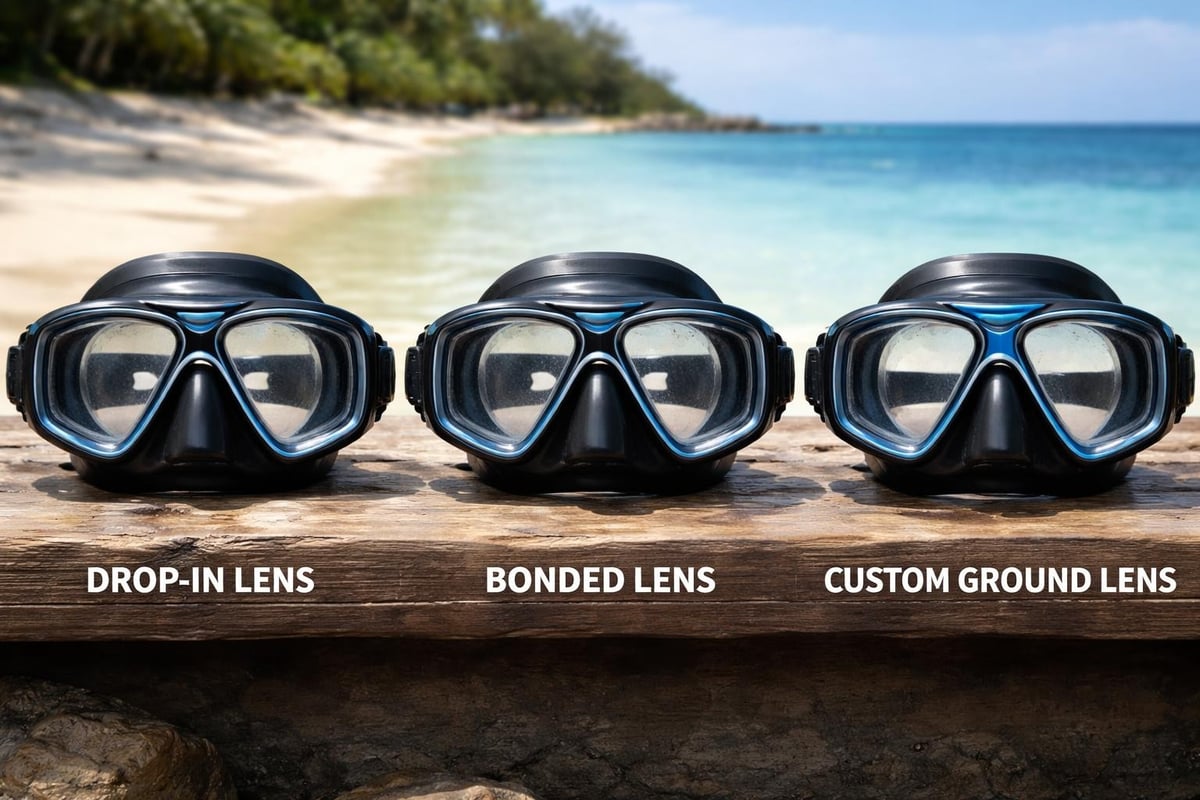
Different manufacturing approaches provide varying levels of customization and optical performance. Drop-in lenses represent the most accessible entry point, featuring pre-manufactured corrective lenses in standard diopter increments that insert into compatible mask frames. This approach works well for mild to moderate vision correction needs, though it typically limits customization options.
Bonded lenses offer superior optical quality by permanently attaching prescription lenses to the mask's existing lens structure. This method creates a seamless viewing experience without the air gap that can occur with drop-in alternatives. The bonded approach accommodates more complex prescriptions, including astigmatism correction and progressive prescription diving masks for those requiring multifocal solutions.
Custom ground lenses represent the premium tier, manufactured specifically for your exact prescription specifications. These lenses provide the highest optical accuracy and can accommodate virtually any prescription complexity, including high diopter counts and specialized corrections.
Determining Your Optical Requirements
Accurate prescription information forms the foundation of a successful prescription snorkel mask purchase. Your eye care professional provides several key measurements that directly impact lens manufacturing. Sphere (SPH) values indicate nearsightedness (negative numbers) or farsightedness (positive numbers), while cylinder (CYL) and axis measurements address astigmatism when present.
Pupillary distance (PD) becomes particularly important for custom lens solutions, ensuring proper optical alignment. For snorkeling applications, some variations from your everyday eyewear prescription may optimize underwater performance. The magnification effect of water typically makes objects appear 25% larger and closer, which can influence the ideal correction strength.
Prescription Considerations for Water Environments
The underwater environment introduces unique optical dynamics that affect vision correction strategies. Water's refractive properties alter how light reaches your eyes, potentially shifting the optimal prescription strength compared to land-based eyewear. Many experienced divers and snorkelers find success with prescriptions slightly weaker than their everyday glasses, particularly for distance viewing.
| Vision Condition | Typical Adjustment | Rationale |
|---|---|---|
| Mild Myopia (-1.00 to -3.00) | Same as eyewear prescription | Minimal adjustment needed |
| Moderate Myopia (-3.25 to -6.00) | Reduce by 0.25 to 0.50 diopters | Compensate for water magnification |
| High Myopia (beyond -6.00) | Individual assessment required | Complex optical interactions |
| Hyperopia (any level) | Match eyewear prescription | Farsightedness requires full correction |
Astigmatism correction presents additional considerations, as the orientation and stability of the mask affect cylindrical lens performance. Understanding how corrective lenses work in dive masks helps ensure you select appropriate specifications for your underwater adventures.
Selecting the Right Frame and Fit
Mask fit matters just as much as optical correction quality. A perfectly prescribed lens delivers no benefit if water constantly leaks into your mask or pressure creates discomfort during extended wear. The seal between your face and the mask skirt determines both comfort and functionality throughout your snorkeling session.
Volume considerations affect both performance and comfort. Low-volume masks require less air for equalization and tend to stay closer to your face, reducing drag and improving the field of view. However, they may feel more restrictive to some users. Higher-volume masks offer a more spacious feel but require more frequent clearing if water enters.
Face Shape and Seal Quality
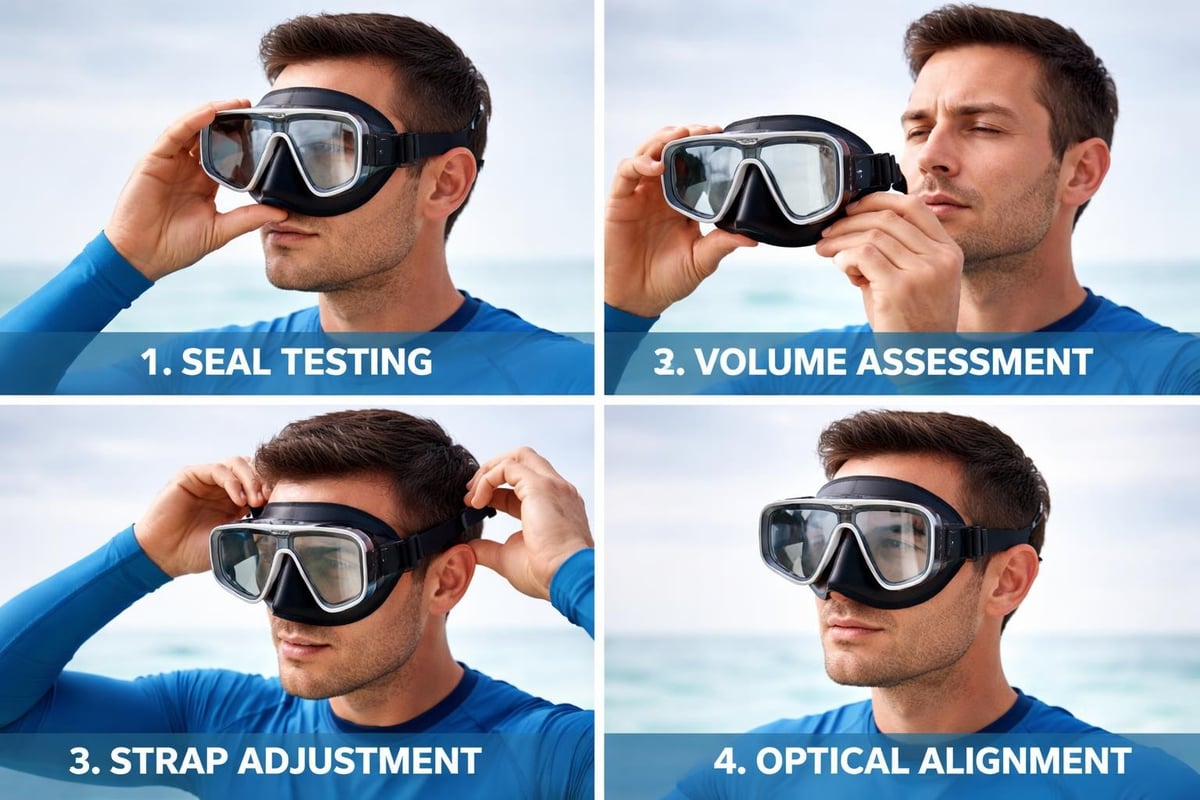
Individual facial structure significantly impacts which mask models provide optimal sealing. The mask skirt should contact your face along its entire perimeter without gaps or excessive pressure points. Testing the seal involves placing the mask against your face without the strap, inhaling gently through your nose, and verifying the mask stays in place through suction alone.
- Narrow faces often require masks with smaller frame dimensions and softer skirt materials
- Wider faces benefit from masks with extended skirt coverage and adjustable strap positioning
- High or low nose bridges need compatible internal nose pocket designs
- Facial hair demands extra attention to skirt material and seal design
The relationship between prescription lens positioning and your eye alignment affects visual comfort during extended use. Custom solutions from providers like diving-mask.com ensure proper optical centering matched to your facial geometry.
Optical Quality and Lens Materials
Modern prescription snorkel mask lenses utilize advanced materials that balance optical clarity, durability, and safety. Tempered glass remains the standard for quality masks due to its scratch resistance, optical neutrality, and safety characteristics. When subjected to impact, tempered glass fractures into small, less dangerous pieces rather than sharp shards.
Lens coatings enhance performance across various conditions. Anti-reflective treatments reduce glare from the water surface and internal reflections, improving visual comfort in bright conditions. UV protection shields your eyes from harmful radiation that penetrates water, particularly important in tropical snorkeling destinations with intense sun exposure.
Single-Vision vs. Multifocal Solutions
Single-vision lenses address one primary vision condition, either distance or near vision correction. These work excellently for most snorkeling applications where you primarily focus on viewing distant objects like fish, coral, or underwater topography. The simpler optical design also typically costs less than multifocal alternatives.
Bifocal and progressive lenses serve snorkelers who need both distance and near vision correction. Reading dive computers, checking underwater cameras, or examining small marine specimens requires near vision capability. Bifocal dive masks incorporate distinct reading zones, usually positioned in the lower lens area for natural downward viewing.
Comparing Ready-Made and Custom Options
The prescription snorkel mask market offers solutions across a spectrum of customization levels and price points. Ready-made masks with standard prescription increments provide immediate availability and lower costs, making them attractive for casual snorkelers or those trying prescription masks for the first time. Major retailers stock common prescriptions, typically in 0.50 diopter increments from -1.00 to -8.00 for myopia.
Various types of prescription snorkel masks serve different needs and budget levels. Off-the-shelf solutions work well when your prescription falls within standard parameters and you don't require astigmatism correction or specialized features. The limitation lies in the stepped increments, which may not precisely match your prescription.
Custom prescription masks offer exact optical matching regardless of prescription complexity. This precision matters most for individuals with:
- Significant differences between left and right eye prescriptions
- Astigmatism requiring cylinder correction
- High diopter counts beyond standard ranges
- Progressive or bifocal requirements
- Specific optical center positioning needs
The investment in custom fabrication pays dividends through superior visual acuity and reduced eye strain during extended snorkeling sessions.
Maintenance and Longevity Considerations
Proper care extends the functional life of your prescription snorkel mask investment. Salt water, chlorine, sand, and UV exposure all degrade mask components over time, but appropriate maintenance protocols minimize deterioration. Rinsing your mask thoroughly with fresh water after each use removes corrosive salt deposits and chemical residues.
Storage practices significantly impact longevity. Masks stored in direct sunlight experience accelerated silicone degradation in the skirt material, while prescription lenses may develop coating damage from prolonged UV exposure. A protective case prevents scratches during transport and storage, particularly important for the optical surfaces.
| Maintenance Task | Frequency | Purpose |
|---|---|---|
| Fresh water rinse | After every use | Remove salt, chlorine, contaminants |
| Mild soap cleaning | Weekly during active use | Deep clean silicone and lenses |
| Anti-fog treatment | Before each session | Prevent lens condensation |
| Strap inspection | Monthly | Check for wear and degradation |
| Seal testing | Before trips | Verify watertight integrity |
Preventing dive mask fogging requires special attention with prescription lenses. Commercial anti-fog solutions work well, though the classic technique of applying a thin layer of diluted baby shampoo provides effective, economical fog prevention. Avoid abrasive materials when cleaning prescription lenses to preserve coating integrity.
Advanced Features and Specialized Designs
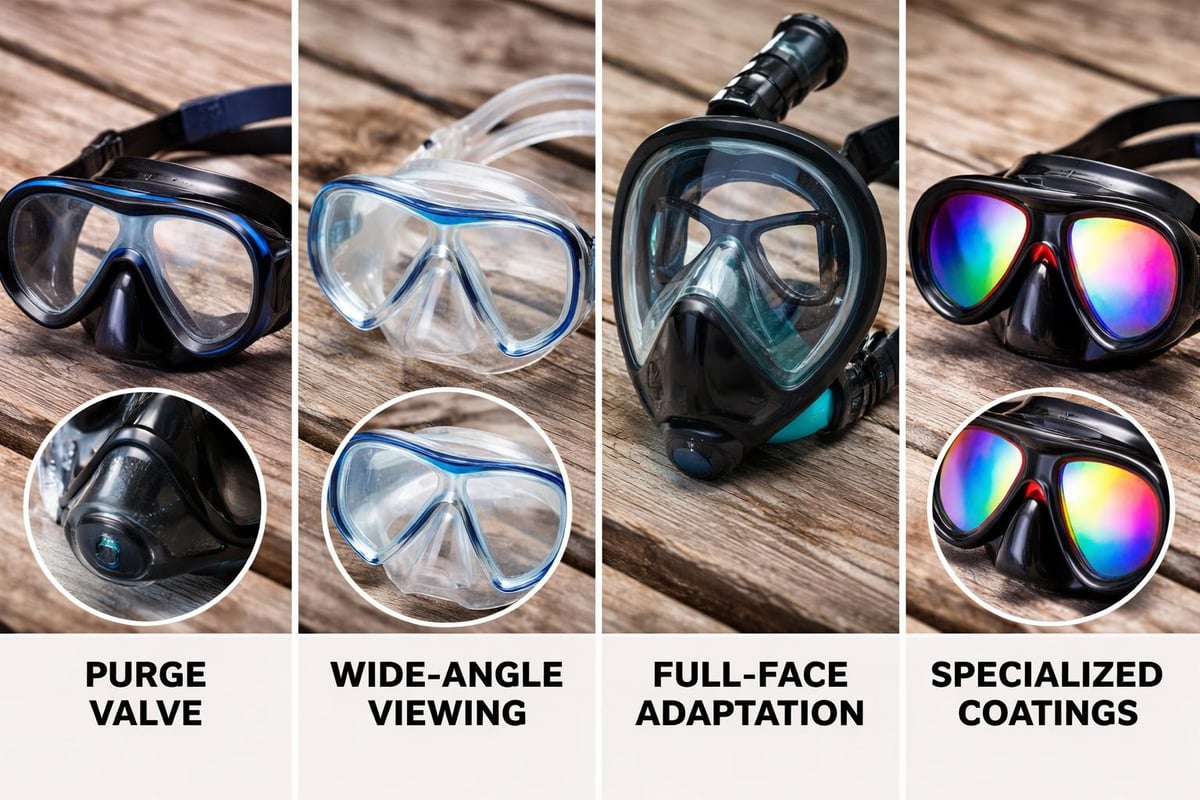
Modern prescription snorkel masks incorporate features that enhance the underwater experience beyond basic vision correction. Purge valves allow easy water clearing without removing the mask, particularly valuable for snorkelers who spend extended periods on the surface. One-way valve design lets you exhale forcefully through your nose to expel water that enters the mask.
Wide-angle viewing systems maximize peripheral vision, helping you track marine life movement and maintain spatial awareness in the water. Some designs incorporate side viewing windows or curved lens geometry that extends the visual field compared to traditional flat-lens masks. For those interested in choosing the right snorkel or scuba mask, understanding these feature differences helps narrow your selection.
Full-Face Mask Adaptations
Full-face snorkel masks have gained popularity for their ease of breathing and expanded field of view. Prescription adaptations for these designs typically use magnetic or clip-in lens systems that attach to the interior viewing area. This approach allows prescription customization while maintaining the mask's integrated breathing system.
However, full-face designs introduce specific considerations regarding optical positioning and potential distortion at the edges of the viewing area. The larger lens surface area may create peripheral aberrations not present in traditional mask designs, particularly with higher prescription strengths.
Prescription Strength Limitations and Alternatives
While prescription snorkel mask technology accommodates most vision correction needs, extreme prescriptions may encounter limitations. Very high myopia (beyond -10.00) or hyperopia (beyond +6.00) can challenge standard manufacturing approaches due to lens thickness and optical distortion concerns. Understanding prescription mask options helps set realistic expectations.
Contact lens alternatives remain viable for some snorkelers, particularly those with complex prescriptions difficult to accommodate in mask lenses. Soft contact lenses can be worn during snorkeling, though experts recommend daily disposables to minimize infection risk from water exposure. The primary drawback involves potential lens loss if you open your eyes underwater without a mask.
Hybrid approaches combine moderate prescription mask correction with contact lenses for fine-tuning. This strategy works when your prescription exceeds standard mask capabilities or requires corrections (like significant astigmatism) difficult to incorporate into curved mask lenses.
Cost Analysis and Value Assessment
Prescription snorkel mask pricing varies considerably based on customization level, brand reputation, and optical complexity. Entry-level models with standard prescriptions start around seventy to one hundred dollars, providing basic vision correction for recreational snorkelers. Mid-range options incorporating higher-quality frames, better sealing systems, and wider prescription ranges typically cost between one hundred fifty and three hundred dollars.
Premium custom solutions with ground lenses, specialized coatings, and advanced features can exceed four hundred dollars. While this represents a significant investment, evaluating the best prescription dive masks demonstrates how quality correlates with long-term satisfaction and optical performance.
Consider these value factors when assessing options:
- Frequency of use: Regular snorkelers benefit more from premium investments than occasional users
- Prescription stability: Changing prescriptions may favor less expensive interim solutions
- Dual-purpose capability: Masks suitable for both snorkeling and scuba diving offer broader utility
- Warranty coverage: Better warranties protect your investment against manufacturing defects
- Optical precision requirements: Complex prescriptions demand higher-quality custom fabrication
The cost difference between adequate and excellent vision underwater often amounts to less than the price of a single dive trip, making quality prescription masks a worthwhile investment for serious snorkelers.
Safety Considerations and Limitations
Understanding the safety parameters of your prescription snorkel mask ensures enjoyable, risk-free underwater experiences. Tempered glass lenses provide essential impact resistance, but they're not indestructible. Inspect lenses regularly for cracks, chips, or delamination, particularly after impacts or when traveling with your mask in checked luggage.
Equalization limitations affect some prescription mask designs, particularly those with thick lenses or restrictive internal volumes. Pinching your nose through the mask's nose pocket to equalize pressure becomes more challenging with certain frame geometries. This matters most for breath-hold diving rather than surface snorkeling but deserves consideration if you engage in both activities.
Water pressure at depth affects all mask types, prescription or otherwise. The increased pressure compresses the air space inside the mask, creating suction against your face and potentially affecting vision through lens distortion. Regular equalization by exhaling small amounts of air through your nose maintains comfortable pressure balance.
Matching Masks to Snorkeling Environments
Different snorkeling locations and conditions influence optimal prescription snorkel mask selection. Tropical reef snorkeling typically occurs in calm, clear water with excellent visibility, where standard prescription accuracy and comfort take priority over specialized features. The vibrant colors and diverse marine life reward the visual clarity that proper prescription correction provides.
Temperate water snorkeling often involves reduced visibility, cooler temperatures, and potentially stronger currents. These conditions favor masks with excellent sealing characteristics and fog-resistant treatments. Understanding color vision underwater helps you appreciate how prescription clarity interacts with natural light filtration at various depths.
Boat-based snorkeling versus shore entry affects convenience factors like mask storage and the ability to clean lenses between sessions. Prescription masks used from boats benefit from protective cases that prevent damage during transport and between uses.
Adapting from Regular Eyewear to Prescription Masks
Transitioning from land-based vision correction to underwater prescription masks involves adjustment periods for most users. The curved surface of mask lenses creates slightly different optical characteristics compared to flat eyeglass lenses, potentially causing initial spatial perception differences. Most snorkelers adapt within one or two sessions as their visual system recalibrates.
Peripheral vision differences become noticeable since mask frames restrict lateral viewing compared to modern eyewear. This natural limitation affects all masks but may feel more pronounced initially when you're accustomed to frameless or minimal-frame glasses. Choosing masks with side viewing windows or wide-angle designs minimizes this restriction.
The closer proximity of mask lenses to your eyes compared to eyeglasses affects the perceived field of view and may slightly alter prescription requirements. This geometric difference explains why some users find success with prescriptions marginally different from their everyday eyewear specifications.
Future Developments in Prescription Mask Technology
Emerging technologies promise enhanced prescription snorkel mask capabilities in coming years. Digital lens manufacturing using computer-controlled grinding systems enables increasingly precise prescriptions with faster turnaround times. These automated processes reduce human error while expanding the range of corrections that can be reliably manufactured.
Advanced materials research explores alternatives to traditional glass lenses, including optical-grade polymers that offer impact resistance advantages while maintaining clarity. Though not yet widely adopted for prescription applications, these materials show promise for specialized uses where weight reduction or enhanced safety characteristics justify their current limitations.
Integrated heads-up display technology, already emerging in recreational diving, may eventually incorporate prescription correction elements. Imagine snorkel masks that overlay information about marine species, navigation data, or environmental conditions while providing customized vision correction-a convergence of technologies that seemed far-fetched just years ago.
Prescription Options for Specialized Snorkeling Activities
Different snorkeling specializations create unique prescription mask requirements. Underwater photography demands precise near and distance vision for camera operation and composition viewing. Prescription snorkeling goggles with bifocal or progressive lenses serve photographers who need to read camera displays while maintaining distance vision for subject framing.
Scientific snorkeling and marine biology fieldwork often requires detailed observation of small specimens, favoring stronger near-vision correction than recreational snorkeling. Custom prescription solutions can optimize lens strength for specific viewing distances relevant to research activities.
Snorkeling tourism guides and instructors spend extensive time in the water, making comfort and durability paramount. Professional-grade prescription masks with robust construction and premium optical quality justify their higher costs through reduced eye strain during long working days and extended service life under constant use conditions.
Selecting the right prescription snorkel mask transforms your underwater experiences from frustrating visual compromise to crystal-clear marine exploration. The combination of proper prescription accuracy, comfortable fit, and quality construction ensures you'll appreciate every detail of the underwater world with the same clarity you enjoy on land. Whether you need simple single-vision correction or complex progressive lenses, diving-mask.com specializes in customized prescription diving masks tailored to your exact vision requirements, ensuring your next snorkeling adventure delivers the visual excellence you deserve.