Diving Mask With Prescription Lenses: Expert Guide 2026
Imagine gliding beneath the waves, every detail crisp and vivid, thanks to a diving mask with prescription lenses that matches your vision needs perfectly. For anyone who relies on glasses or contacts, underwater adventures can feel out of reach. This expert 2026 guide removes that barrier, giving you a complete understanding of how to choose, use, and care for a diving mask with prescription lenses.
You will discover the different types of prescription masks available, how to select the ideal fit, and the latest innovations in lens technology. We will also cover practical tips for fitting, maintenance, and answer the most common questions.
Whether you are a diver, snorkeler, or family member with unique vision needs, this guide empowers you to enjoy safe, clear, and unforgettable underwater experiences.
Understanding Prescription Diving Masks
Imagine slipping beneath the waves and seeing every detail with perfect clarity, even if you need corrective eyewear. A diving mask with prescription lenses brings this vision to reality for countless underwater explorers. These specialized masks are designed to correct common eyesight issues, ensuring safety and enjoyment for all divers and snorkelers.
What Are Prescription Diving Masks?
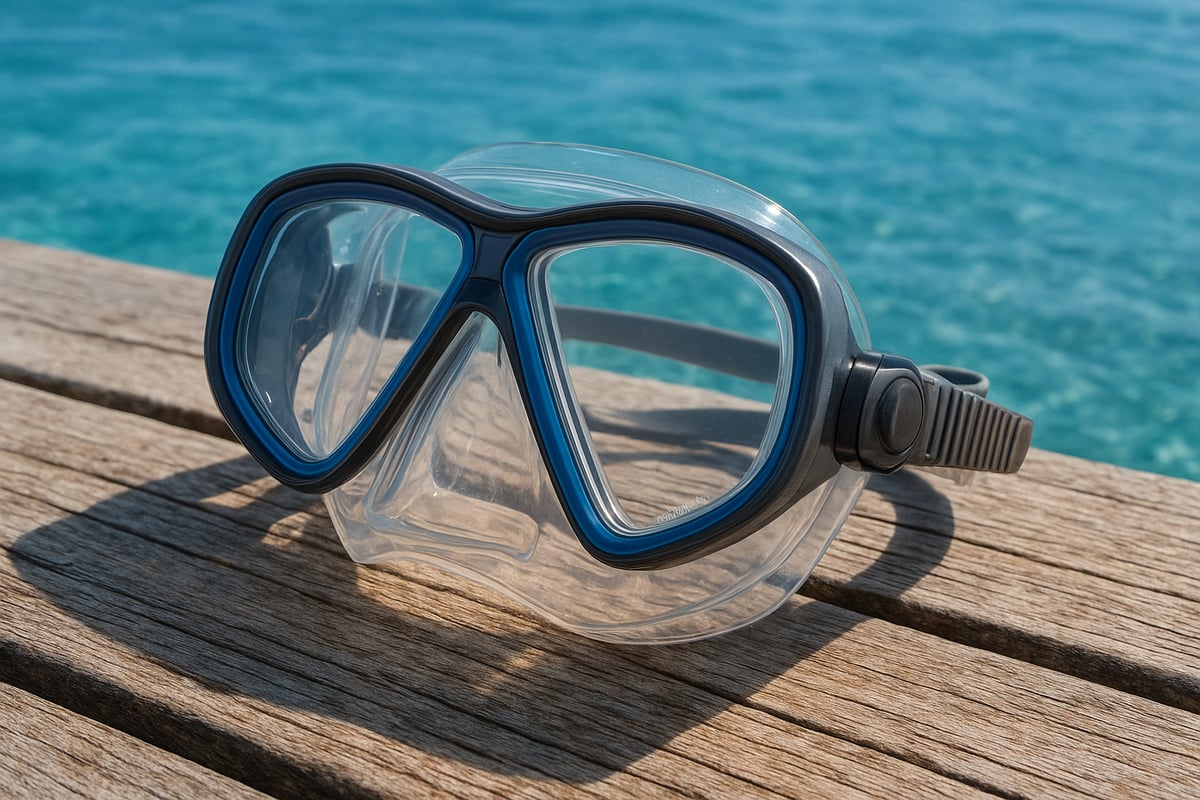
A diving mask with prescription lenses is crafted to correct your vision underwater, just like regular glasses do on land. Unlike standard masks, which use plain tempered glass, these masks incorporate lenses tailored to your specific prescription.
They are essential for divers with myopia, hyperopia, or astigmatism, providing sharp, undistorted views beneath the surface. The concept has evolved from simple lens inserts to highly customized solutions over the past few decades, making underwater adventures accessible for everyone needing vision correction.
Types of Prescription Lenses Available
There are several options when it comes to the lenses in a diving mask with prescription lenses. Single vision lenses address either distance or near vision, while bifocal and progressive lenses cater to those needing multiple focal points. Pre-made lenses offer standard corrections, but custom-made options precisely match unique prescriptions.
Gauge reader lenses are ideal for divers who need clear vision primarily for reading instruments. For an in-depth breakdown of available lens types, see the Types of Prescription Diving Lenses guide.
Benefits of Using Prescription Diving Masks
Using a diving mask with prescription lenses significantly enhances your underwater experience. Improved visibility means safer navigation among reefs and wrecks. Sharper vision boosts confidence and allows for better underwater photography and videography.
You also avoid the discomfort and risk of losing contact lenses while diving. According to Divers Alert Network, 70% of divers using prescription masks report higher satisfaction during their dives. Enhanced clarity leads to memorable, stress-free underwater moments.
Who Needs a Prescription Diving Mask?
A diving mask with prescription lenses is invaluable for anyone who relies on vision correction. This includes recreational divers, professionals, snorkelers, and underwater photographers. Children and families with varying prescriptions can benefit from customized masks, making group vacations more inclusive.
Consider a family trip where both adults and children require different corrections. With tailored prescription masks, everyone enjoys vibrant marine life together without compromise.
Common Myths and Misconceptions
Several misconceptions surround the diving mask with prescription lenses. Some believe contact lenses are always superior underwater, yet contacts can irritate eyes and risk being washed away. Others think prescription masks are prohibitively expensive or only made by select brands.
In reality, modern manufacturing and increased demand have made these masks more accessible and affordable. A wide range of reputable brands now offer prescription options, ensuring a suitable fit for nearly every diver. Understanding the facts empowers you to make the right choice for your underwater vision.
How to Choose the Right Diving Mask With Prescription Lenses
Choosing the ideal diving mask with prescription lenses can transform your underwater experience. The right selection ensures comfort, safety, and clear vision. By following a step-by-step approach, you can confidently find a solution tailored to your specific needs.
Assessing Your Vision Needs
Start by reviewing your latest eye prescription. Accurate correction is essential for a diving mask with prescription lenses to deliver optimal clarity.
Consult your optometrist to identify if you need distance, reading, or astigmatism correction. Some divers require single vision for distance, while others benefit from bifocal or progressive solutions.
For example, a diver with astigmatism may need custom lenses. Always request your full prescription details, including sphere, cylinder, axis, and pupillary distance (PD).
Having a precise prescription helps manufacturers craft lenses that match your exact vision profile. This first step ensures you get the most from your diving mask with prescription lenses.
Mask Fit and Comfort Considerations
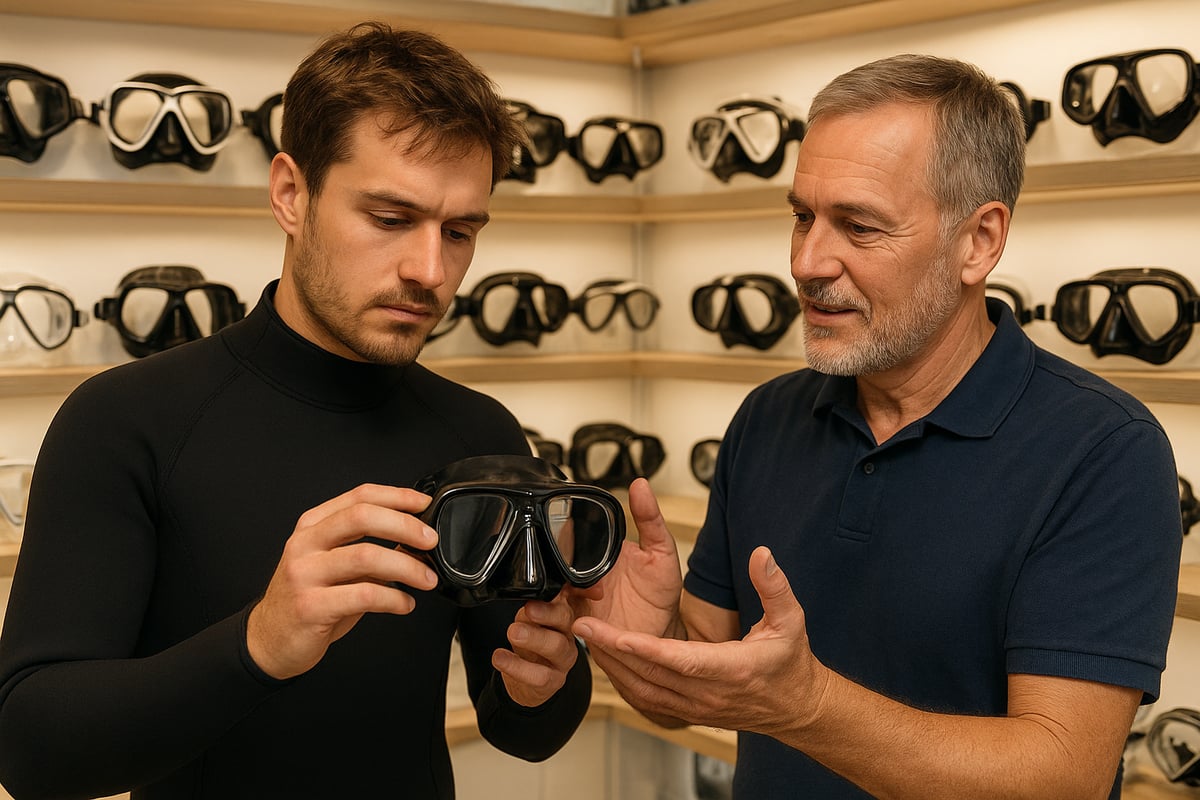
A secure, comfortable fit is crucial for any diving mask with prescription lenses. Begin by testing masks in person, if possible, to evaluate the seal and comfort.
Look for these features:
- Soft silicone skirts for a gentle yet watertight seal
- Tempered glass lenses for durability
- Adjustable straps and ergonomic nose pockets
A mask that fits well prevents leaks and pressure points. Remember, a poor fit can cause discomfort or even mask squeeze. Take time to find a diving mask with prescription lenses that feels natural and secure on your face.
Selecting Lens Type and Customization Options
The right lens type makes a significant difference. With a diving mask with prescription lenses, choose between single vision (distance or reading), bifocal, or progressive lenses.
Custom options include:
- Lens thickness adjustments for strong prescriptions
- Anti-fog and UV protective coatings
- Color correction tints for specific dive environments
For divers who need both near and far correction, progressive lenses offer seamless transitions. Learn more about advanced multifocal options in the Progressive Diving Masks Guide.
Consider how lens customizations can enhance your underwater vision and comfort in a diving mask with prescription lenses.
Compatibility With Mask Brands and Models
Not all masks support prescription lenses. When choosing a diving mask with prescription lenses, verify compatibility with your preferred brand and model.
Well-known brands like Cressi, Mares, and Tusa offer prescription-ready frames. Some use universal lens systems, while others require proprietary inserts.
If you have a favorite mask, check if prescription lenses can be adapted. Many divers upgrade existing gear by retrofitting lenses, combining familiarity with improved vision.
Always confirm compatibility before purchasing a diving mask with prescription lenses to avoid fitment issues.
Price Ranges and What to Expect
Investing in a diving mask with prescription lenses involves understanding the price spectrum. Costs vary based on lens type, customization, and brand reputation.
Below is a simple comparison:
| Lens Type | Pre-made Price | Custom Price |
|---|---|---|
| Single Vision | $50–$120 | $120–$250 |
| Bifocal | $80–$160 | $180–$300 |
| Progressive | $120–$200 | $250–$400 |
Custom lenses are pricier but provide tailored correction. When comparing with traditional eyewear or contacts, a diving mask with prescription lenses is a valuable long-term investment.
Where to Buy and What to Look For
When buying a diving mask with prescription lenses, prioritize authorized dealers and reputable online retailers. Look for warranties, responsive customer support, and clear return policies.
Check for:
- Verified customer reviews
- Certification of lens quality
- International shipping options for travelers
A trusted retailer can guide you through the selection process, ensuring your diving mask with prescription lenses meets your expectations and safety standards.
Latest Technologies and Innovations in Prescription Diving Masks (2026 Update)
Technology is transforming what it means to see clearly underwater. The diving mask with prescription lenses is evolving rapidly, integrating new materials, digital customization, and smart features designed to enhance every dive. Let us explore the innovations making waves in 2026.

Advancements in Lens Materials and Coatings
In 2026, the diving mask with prescription lenses benefits from breakthroughs in lens materials. Manufacturers now use ultra-lightweight polymers that are both impact-resistant and optically superior. These materials make masks more comfortable for long dives.
New anti-fog and scratch-resistant coatings are standard, drastically reducing maintenance and increasing clarity. UV and blue light filtering technologies protect eyes from harmful rays, especially during extended surface intervals. According to industry reports, these materials cut lens fogging by 40 percent, ensuring reliable vision in all conditions.
With these advances, divers enjoy safer, clearer underwater experiences and longer-lasting gear.
Digital Customization and 3D Lens Mapping
Digital technology now allows for precise customization of every diving mask with prescription lenses. Using high-resolution digital scans, manufacturers map each diver’s unique facial structure and prescription needs.
3D printing technology creates custom lenses tailored to complex prescriptions, including high astigmatism or uneven corrections. This ensures a perfect fit and optimal vision. The result is a fully personalized mask that feels natural on the face and delivers unmatched clarity underwater.
These tools also minimize errors and speed up production, making custom prescription dive masks more accessible than ever.
Progressive and Multifocal Lens Improvements
The latest diving mask with prescription lenses now offers advanced progressive and multifocal options. In 2026, new manufacturing techniques produce lenses with seamless transitions between near and far vision.
Divers benefit from a wider field of view and reduced edge distortion, making it easier to read gauges and admire marine life in a single glance. Enhanced comfort is a key focus, providing a smoother experience for users who need both distance and reading correction.
For example, a diver using multifocal lenses can monitor their instruments and enjoy the scenery without removing their mask or switching eyewear.
Smart Mask Features and Integrated Displays
A major leap for the diving mask with prescription lenses is the integration of smart features. Modern masks now include heads-up displays that show depth, dive time, and navigation data directly within the lens. This innovation keeps critical information in view without disrupting the dive.
Prescription lenses are now fully compatible with these digital systems, ensuring sharp vision for every diver. Recent market statistics reveal that 15 percent of new dive masks feature integrated displays. For a deeper dive into wearable tech advancements in diving, see the Wearable Devices in Diving Review.
These improvements mark a new era of safety and convenience for underwater explorers.
Eco-Friendly and Sustainable Manufacturing
Environmental responsibility shapes the future of the diving mask with prescription lenses. Leading brands now use recycled materials in mask frames and packaging, reducing the industry’s ecological footprint.
Eco-certifications and sustainable production practices are becoming standard, as more consumers demand green alternatives in their gear. Manufacturers are also investing in energy-efficient processes and biodegradable components.
Sustainable innovation ensures that divers can enjoy the underwater world while protecting the oceans for generations to come. The combination of technology and eco-friendly design sets a new benchmark for the industry.
Step-by-Step Guide: Ordering and Fitting a Prescription Diving Mask
Ordering and fitting a diving mask with prescription lenses is a straightforward process when you break it into clear steps. This guide will help you navigate each stage, ensuring optimal vision and comfort underwater. Whether you are a new diver or upgrading your gear, following these steps will make your experience seamless and safe.
Step 1: Obtain Your Prescription
The first step in acquiring a diving mask with prescription lenses is to schedule an eye exam with a qualified optometrist. Make sure your prescription is current, ideally less than 12 months old, as vision can change over time.
Request a complete prescription, including your sphere, cylinder, axis, and pupillary distance (PD). PD is crucial for aligning the lenses with your eyes. Having the latest information ensures your diving mask with prescription lenses will offer clear, accurate vision underwater.
Keep a digital or paper copy of your prescription ready for your order. This preparation saves time and reduces the risk of errors during the ordering process.
Step 2: Choose Your Mask and Lens Type
Now, select a mask style and brand compatible with prescription lenses. Consider factors like face shape, comfort, and seal quality. Decide on lens type: single vision (distance or reading), bifocal, or progressive lenses.
Lens coatings, such as anti-fog or UV protection, enhance underwater clarity and safety. For divers who need only distance correction, Single Vision Prescription Masks offer simplicity and reliability.
Consider color-tinted lenses for different environments. Blue water divers might prefer clear or blue-tinted lenses, while green water may benefit from amber tints. Ensure your chosen mask supports the lens customization you need for your diving mask with prescription lenses.
Step 3: Submit Your Order and Prescription Details
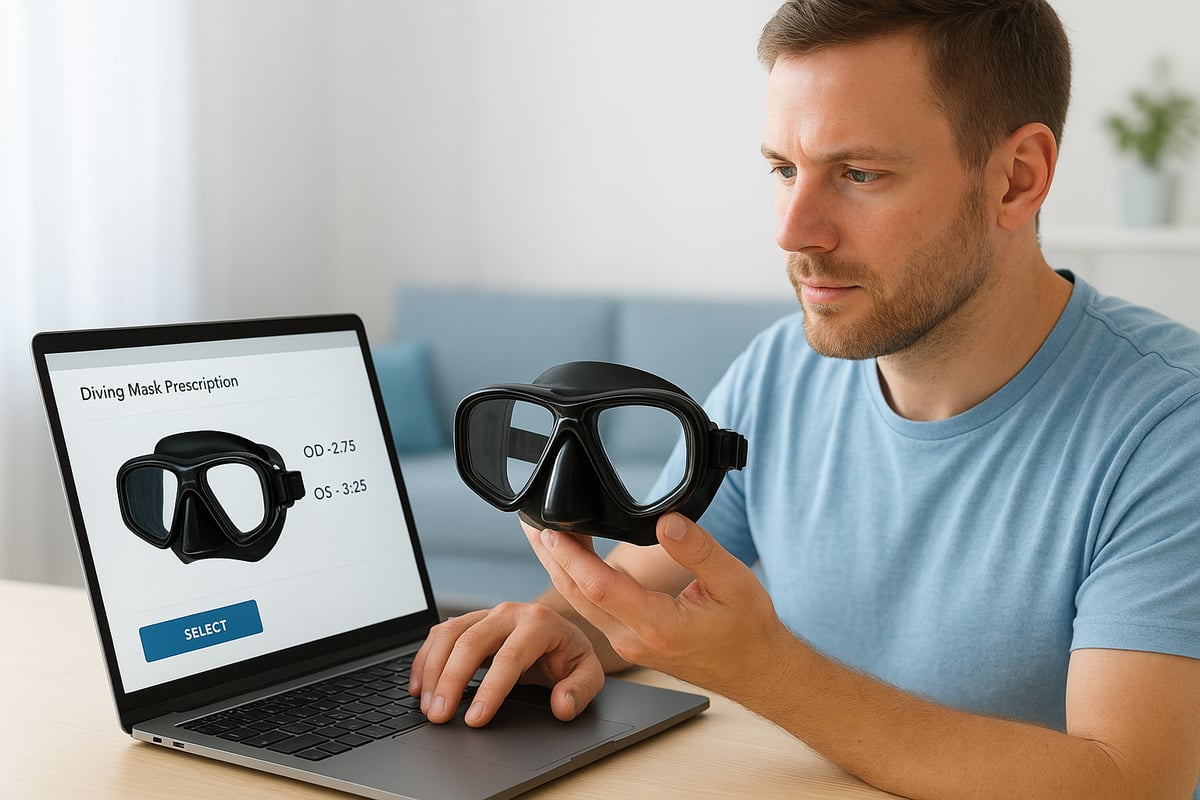
Once you have selected your mask and lens type, proceed to the retailer’s order form. Accurately enter all prescription details—sphere, cylinder, axis, and PD—to avoid delays or mistakes.
Double-check your numbers before submission. Many retailers require you to upload a scanned copy of your prescription. This extra step guarantees the lenses for your diving mask with prescription lenses are crafted precisely to your needs.
Some online stores offer a checklist or table to help you track required information:
| Detail | Example Entry |
|---|---|
| Sphere (OD/OS) | -2.50 / -3.00 |
| Cylinder (OD/OS) | -1.00 / -0.75 |
| Axis (OD/OS) | 90 / 80 |
| PD | 62 mm |
Step 4: Custom Lens Manufacturing
After your order is received, manufacturers begin crafting your custom lenses. Using advanced technology, they shape lenses to match your unique prescription. Precision is vital, as even small errors can affect underwater clarity.
Quality control teams inspect each lens for accuracy and fit. For example, German-made masks are renowned for their strict quality standards, ensuring each diving mask with prescription lenses meets both comfort and vision requirements.
Lenses are then fitted into your chosen mask model, guaranteeing a secure, leak-resistant result. You are kept informed throughout the process, so you know when to expect delivery.
Step 5: Fitting and Adjusting Your New Mask
When your diving mask with prescription lenses arrives, test the fit before your first dive. Adjust the straps so the mask sits snugly but comfortably on your face. The silicone skirt should create a watertight seal without excessive pressure.
Try the mask in shallow water or at home. Check for leaks and ensure your vision is clear through the prescription lenses. If you notice discomfort or fogging, adjust the nose pocket or straps as needed.
If persistent issues occur, consult the retailer or manufacturer for support. Proper fitting ensures safety and comfort throughout your underwater adventures.
Step 6: First Dive With Your Prescription Mask
Before your initial dive with a diving mask with prescription lenses, allow yourself time to adapt. Start with short, shallow dives to become accustomed to the enhanced vision and fit.
Perform safety checks with your dive buddy, confirming the mask seals properly and the lenses provide clear sight. Gradually increase dive duration as your confidence grows.
This careful approach helps you fully enjoy the benefits of a diving mask with prescription lenses, making each underwater journey safer and more rewarding.
Maintenance, Care, and Longevity of Prescription Dive Masks
Proper care of your diving mask with prescription lenses is essential for crystal-clear underwater experiences and long-term durability. By following a few straightforward maintenance steps, you can ensure your mask remains comfortable, functional, and reliable across many dives.
Cleaning and Storage Best Practices
To keep your diving mask with prescription lenses in top condition, rinse it thoroughly with fresh water after every dive. This removes salt, sand, and debris that can scratch or cloud the lenses.
Use only mild soap or specialized mask cleaner. Avoid household chemicals, as they can damage both the silicone and the prescription lenses.
Dry your mask in a shaded, well-ventilated area. Direct sunlight can cause the skirt and straps to degrade over time.
Store your mask in a hard protective case. This prevents accidental impacts and keeps dust away from the lenses.
Never leave your diving mask with prescription lenses in a hot car or sealed wet bag for prolonged periods. This can warp the frame and encourage mold growth.
Preventing and Treating Fogging
A fogged lens can ruin your dive, so preventing fog on your diving mask with prescription lenses is crucial. Before each dive, rinse the inside of the lenses and apply an anti-fog solution or gel.
For a quick home remedy, gently rub a small amount of baby shampoo on the inside of the lenses, then rinse lightly. This creates a thin film that helps prevent condensation.
Consider choosing a mask with factory-applied anti-fog coatings. According to 2026 tests, anti-fog coatings can help extend clear vision by up to 2 hours.
Always avoid touching the inside of the lenses with your fingers, as oils can worsen fogging. If fogging persists, clean the mask thoroughly and reapply your preferred anti-fog method.
Handling Scratches and Lens Damage
Inspect your diving mask with prescription lenses before and after each dive for scratches, chips, or cracks. Even minor surface damage can reduce visibility and compromise safety underwater.
If you notice a scratch, assess whether it affects your field of vision. Small scratches may be manageable, but deep or central ones usually require a lens replacement.
Always transport your mask in a protective case, especially when traveling. Avoid placing it lens-down on rough or sandy surfaces.
If the frame or lens is cracked, stop using the mask immediately. Consult your retailer or manufacturer for repair or replacement options.
Maximizing Mask Lifespan
A regular maintenance schedule will help your diving mask with prescription lenses last for years. Rinse, dry, and store it properly after every use.
Take advantage of manufacturer warranties, which often cover defects and some accidental damage. Keep your purchase documentation handy in case you need service.
Look for signs that it is time to replace your mask: persistent leaks, a yellowed or brittle skirt, or irreparable lens damage. When in doubt, consult the Frequently Asked Questions: Prescription Masks for expert advice on mask care and replacement.
By following these tips, you can enjoy clear, safe dives with your diving mask with prescription lenses for many seasons to come.
Frequently Asked Questions About Prescription Diving Masks
Choosing a diving mask with prescription lenses can raise several important questions for divers and snorkelers. Below, we answer the most common queries to help you make the best decision for your underwater adventures.
Can I use contact lenses instead of a prescription mask?
Using contact lenses while diving is possible, but it comes with risks such as eye infections and lens loss. Many divers prefer a diving mask with prescription lenses for safety and comfort. According to DAN Research on Diving Safety, prescription masks reduce the risk of contamination and provide clear vision without the worry of losing lenses underwater.
How accurate are custom prescription lenses in dive masks?
Custom lenses are crafted to match your exact prescription, offering a level of clarity similar to everyday eyewear. Manufacturers use precise measurements to ensure that your diving mask with prescription lenses corrects your vision both near and far, depending on your needs.
Are prescription masks suitable for children and teens?
Absolutely. Prescription diving masks are available in smaller sizes and can be adjusted for growing children and teens. It is important to have an up-to-date prescription and to check the fit regularly as children grow.
What is the difference between pre-made and custom lenses?
| Feature | Pre-made Lenses | Custom Lenses |
|---|---|---|
| Prescription Range | Limited, standard steps | Exact match for prescription |
| Cost | Lower | Higher |
| Delivery Time | Faster | Longer |
| Suitability | Mild corrections | All types, including complex |
Pre-made lenses are suitable for mild corrections, while custom options are ideal for unique or high prescriptions.
How long does it take to receive a custom prescription mask?
Delivery times vary. Pre-made options may ship within days, while custom masks can take two to four weeks depending on the manufacturer and shipping location.
Can I upgrade my existing mask with prescription lenses?
Many modern masks allow for prescription lens upgrades. Check if your current model supports lens replacement or consult with your supplier for compatibility.
Are there prescription options for extreme vision corrections?
Yes, even those with high levels of myopia, hyperopia, or astigmatism can find a diving mask with prescription lenses tailored to their needs. Advanced manufacturing and 3D lens mapping make complex prescriptions possible.
Tips for traveling internationally with a prescription dive mask
Bring a copy of your prescription, pack your mask in a protective case, and check airline regulations. It is also wise to research local dive shops for support in case you need repairs or replacement parts. For fit and comfort, review this Diving Mask Squeeze Overview before your trip.